World Dairy Diary

Holstein Foundation ArtSale Deadline

Holstein FoundationTime is running out fast on the Holstein Foundation online ArtSale. Here’s a place to get some holiday shopping out of the way in advance.

Bidding in the Holstein Foundation ArtSale will close December 1, 2005 at 5:00p.m. EST. Visit www.holsteinfoundation.org to view the Art Sale Catalog and bid on your favorite piece. The high-quality paintings, ceramics, and sculptures, all relating to dairy cattle, make perfect holiday gifts. All proceeds from the Holstein Foundation Art Sale benefit Foundation programs. Bidding is expected to be very busy on December 1, so make sure your bid is the last one! For any questions relating to the Art Sale, or to phone in bids on December 1, please contact Jess Strout at 800-952-5200, ext. 4128 or jstrout@holstein.com.

Microdairies Facing Regulators In Washington
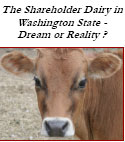
WASDO PamphletHere’s an interesting item about the raw milk situation in Washington state. This is from an AP story. Basically, it looks like the Washington state dept. of agriculture wants people producing and selling raw milk to be licensed and regulated or shut down.

To combat this 2 groups have been formed, the Washington Association of Shareholder Dairy Owners and Raw Dairy Choice Campaign.

I can’t remember when I’ve had raw milk. I know it was in my bottle as a baby since my grandfather had a dairy next to where my home was. But then we started getting it delivered in bottles and pasteurized. Nowdays we get it as 1%, 2%, etc. I only like it whole myself. The story mentions microdairies. Kind of sounds like micro breweries. A nice place to go get a cold bottle of freshly bottled home brew, er, milk.

Bander Uses Expand

The Callicrate BanderSomehow we didn’t get the latest news from the Callicrate Bander posted here but that’s easy to fix. You can link to the full release which has sound bites included that you can listen to on your computer.

USE OF BANDERS EXPANDS BEYOND CASTRATION

A popular castration device is proving adaptable for a wide variety of other animal health procedures, according to livestock producers and veterinarians.

(St. Francis, KS) The Callicrate Bander was developed as a tool for low-stress, bloodless, user-friendly castration that enables cattle on feed to maintain high performance levels. However, the ligation capabilities of the Callicrate Bander, which is designed and handcrafted in the U.S., also lends itself to a variety of other animal health treatments.

Tom King, an independent marketing representative from Oshkosh, Nebraska says he continues to see new uses for the bander, especially among livestock veterinarians who use it when they need a sanitary way to shut off blood supply for operations.

“I’ve had veterinarians tell me they use it on just about anything that’s sticking out that’s not supposed to be there. For blood worts and tumors and damaged teats on dairy cows. Even had two vets now tell me that they’ve used it to amputate broken legs that needed to be taken off.”

Tail docking is just one example of a procedure made simple, safe and stress-free by using the Callicrate Bander. Marketing rep Mick Lovelace of Edmond, Oklahoma says the practice is widely used on dairies where sanitation in milking barns and parlors is an issue, and the Callicrate Bander makes the procedure much simpler for the dairy farmer in either a stall barn or a parlor barn situation. Full Release (Word Document)

Holstein USA Board Meeting

Holstein Association USAHolstein Association USA just held its annual fall board meeting in St. Louis and provided some details:

The meeting, led by newly elected Holstein President Randy Gross, was a successful and productive exchange of ideas, discussion and action.

Registrations continue to grow – 248,729 animals have been registered through the end of October 2005, an increase of 3.9% from 239,430 in 2004. Animals transferred through the end of October are: 47,684 compared to 47,709 at the same time last year. Classification activity is up 4.6% from last year, 167,419 animals have been classified through the end of October, in a total of 4,184 herds, compared to 3,916 herds in 2004, an increase of herd activity of 6.8%.

The Board approved the recommendation of the Junior Advisory and Youth Activities Committees to denote Louisville, Kentucky as the site of the Grand National Junior Holstein Show, along with the remaining five designated National Junior Holstein Shows. The Board approved changes to the delegate reimbursement policy, effective with the June 2006 Annual Meeting. All delegates who attend the entire Annual Meeting will be reimbursed $400 for their expenses.

The Board received various committee reports including the Audit, Holstein Breed of the Future, International, Show and Junior Advisory Committees. Chief Financial Officer, Barbara Casna, reported the Association is projected to have another very healthy year in 2005, with net operating results forecasted to be $951,000. Total revenues through October 2005 are $11,800,000 which is an increase of $303,000 from last year or 3%. The Holstein Association Reserve Fund on October 31, 2005 was valued at $21,591,000, a gain of $551,000, or 3%, since January 1st.

Holstein Association staff presented the 2006 Management-by-Objective Business Plan to the Board of Directors. The plan was approved. The Board welcomed representatives of Monsanto Company, Roger A. Cady, PhD and Shay Sunderland, PhD for a discussion on the future of the dairy industry.

Back In The Saddle

Hello World Dairy Diary fans. We’ve taken an extended break from posting to work on some other projects and determine where we go from here.

Where we go is basically this. We’ll begin posting dairy news from around the world on a regular basis immediately and are seeking sponsors! We really appreciate our original 3 sponsors and will keep their logo/links up for the time being.

So, look for much more to come. It’s late but I’ll have more news starting tomorrow.

Thanks for visiting.